Are you tired of wasting time and money on hair care products that simply don’t deliver? Look no further! We have the ultimate solution that will revolutionize your hair care routine. Unlock the secrets to perfectly balanced and effective hair care by understanding your hair’s unique porosity. Say goodbye to guesswork and hello to a hair care routine that truly works for you. In this comprehensive guide, we’ll reveal two foolproof tests to determine your hair’s porosity level. Armed with this knowledge, you’ll have the power to select the perfect products and techniques, ensuring your locks always look their absolute best. Get ready to dive into the fascinating world of hair porosity and experience the ultimate hair transformation. It’s time to give your hair the pampering it deserves.
Mastering hair porosity is the ultimate secret to achieving a truly glorious mane! This extraordinary concept revolves around your hair’s remarkable prowess in absorbing and retaining moisture. How amazing is that? The key lies in the intricate structure of your hair’s cuticle layer, which acts as a formidable shield. Depending on its openness, your hair can effortlessly embrace moisture or carefully regulate its absorption. Prepare to delve into the depths of this captivating subject and unlock the full potential of your luxuriant strands!
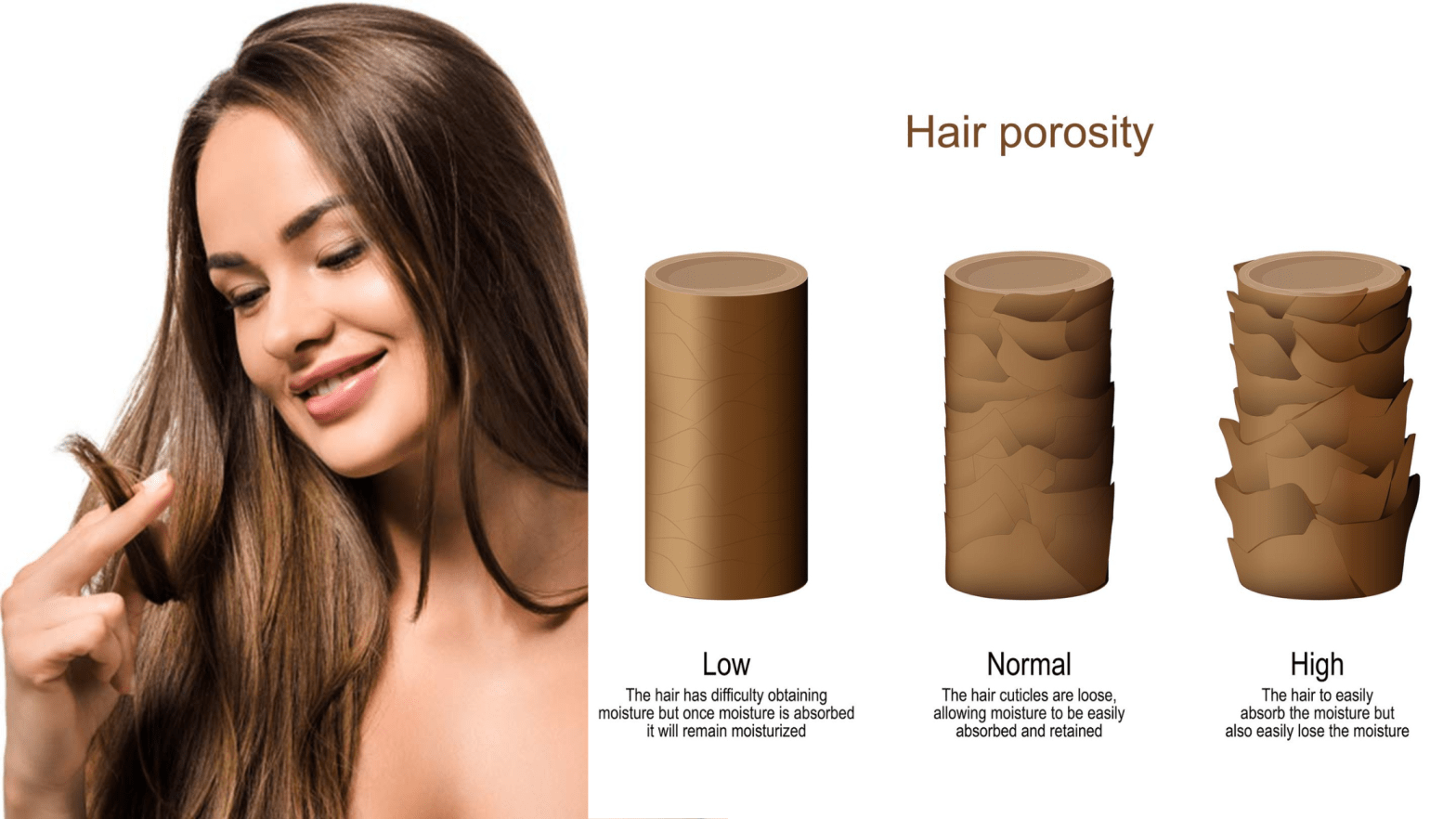
Let’s explore the fascinating world of hair porosity and discover its three main types together:
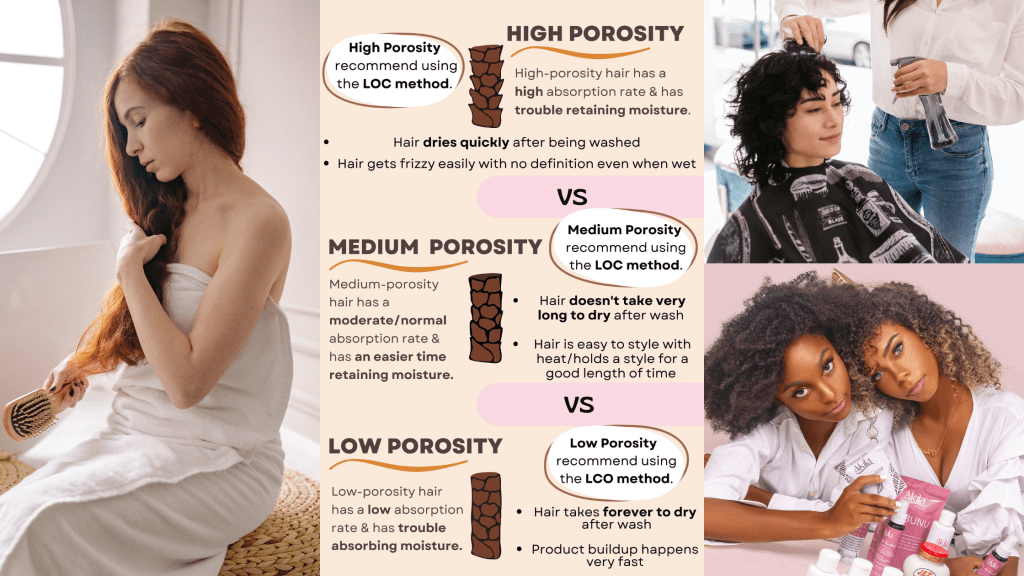
- Low porosity hair: This type of hair has a tightly closed cuticle layer, making it difficult for moisture to penetrate. It repels water and products, causing them to sit on the hair rather than being absorbed. Low porosity hair can take a longer time to dry and may be prone to product buildup.
- Normal porosity hair: Hair with normal porosity has a moderately open cuticle layer. It can absorb and retain moisture well without becoming overly greasy or dry quickly. This type of hair is generally considered the most manageable.
- High porosity hair: High porosity hair has a very open cuticle layer, allowing moisture to be easily absorbed. However, it also loses moisture quickly, making it prone to dryness and frizz. High porosity hair may be damaged due to factors such as excessive heat styling, chemical treatments, or environmental damage.
Understanding your hair’s porosity can empower you to make confident choices in your hair care journey. By determining your hair’s unique porosity level, you unlock the secret to selecting the perfect products and tailoring a nurturing hair care routine. For instance, those blessed with low porosity hair can luxuriate in the lightweight, liquid-based products that effortlessly penetrate and nourish. Conversely, individuals with high porosity hair can revel in the embrace of rich, moisturizing treatments that lovingly lock in the hydration their tresses crave. With this newfound knowledge, you can elevate your hair care experience to new levels of bliss and radiance.
Low Porosity Hair :
Finding the perfect hair care routine for low porosity hair is an exciting journey! Embrace the opportunity to discover the best products that will work wonders for your luscious locks. Remember, the key is to choose lightweight, water-based formulas that will nourish your strands and effortlessly penetrate the cuticles. Keep an eye out for products with ingredients specifically designed to uplift those stubborn cuticles, allowing moisture to deeply hydrate your gloriously gorgeous hair. Let’s dive into some highly recommended products and ingredients for your magnificent low porosity hair:
- Clarifying Shampoo: Use a clarifying shampoo occasionally to remove product buildup from the hair. Product buildup can make it even harder for moisture to penetrate low porosity hair.
- Moisturizing Shampoo: Look for shampoos that are sulfate-free and contain hydrating ingredients like glycerin, aloe vera, or honey. These ingredients can help attract and retain moisture in the hair.
- Leave-in Conditioner: A leave-in conditioner is an essential product for low porosity hair. Choose a lightweight leave-in conditioner that won’t weigh down your hair but will provide moisture and help in detangling.
- Deep Conditioner: Opt for deep conditioners that are specifically formulated for low porosity hair. Look for ingredients like coconut oil, olive oil, or shea butter, as they can penetrate the cuticles and provide much-needed moisture.
- Humectants: Humectants are ingredients that attract moisture from the environment and help retain it in the hair. Glycerin and honey are excellent natural humectants that can benefit low porosity hair.
- Steamer or Heat Cap: Using a steamer or a heat cap while deep conditioning can help open up the cuticle layer temporarily, allowing the products to penetrate the hair shaft more effectively.
- Protein Treatments: Low porosity hair can sometimes benefit from protein treatments to strengthen the hair shaft. Look for products with hydrolyzed proteins or amino acids to help repair any damage and improve the hair’s overall health.
- Lightweight Oils: Some lightweight oils, such as argan oil or grapeseed oil, can help seal moisture into low porosity hair without causing excessive buildup.
Using hair products in moderation can greatly enhance the health and appearance of your locks. It’s important to find the perfect balance, as excessive product application can lead to buildup and weigh down your hair. To achieve optimal results, be sure to apply products to damp hair for better absorption. Embrace the journey of exploring various products and ingredients tailored to suit your individual hair needs. Remember, with a little experimentation, you’ll uncover the perfect formula for your hair’s ultimate happiness!
Normal Porosity Hair :
Good news for those with normal porosity hair! You have the freedom to explore a plethora of hair care products. This hair type boasts a highly balanced moisture absorption and retention, allowing you to experiment with a wide range of options. Bid adieu to concerns about dryness or excessive greasiness. Embrace the following recommended products and ingredient suggestions tailor-made for your normal porosity locks:
- Balanced Shampoo: Use a shampoo that is gentle and balanced, neither too moisturizing nor too stripping. Look for sulfate-free options that cleanse the hair without removing essential oils.
- Conditioner: A regular moisturizing conditioner is suitable for normal porosity hair. Look for products with ingredients like shea butter, coconut oil, or jojoba oil to keep your hair well-moisturized.
- Deep Conditioner: Regular deep conditioning treatments can help maintain the health of normal porosity hair. Look for deep conditioners with a mix of moisturizing and protein-rich ingredients to keep the hair strong and nourished.
- Leave-in Conditioner: A lightweight leave-in conditioner can be beneficial for adding extra moisture and manageability to your hair.
- Hair Masks: Use hair masks or intensive treatments occasionally to give your hair an extra boost of hydration and nourishment.
- Heat Protectant: If you use heat styling tools, make sure to apply a heat protectant spray or serum to protect your hair from heat damage.
- Lightweight Oils: Normal porosity hair can benefit from lightweight oils like argan oil, almond oil, or grapeseed oil to add shine and moisture without weighing down the hair.
- Styling Products: Use styling products that suit your hair type and desired hairstyle. Look for products that provide hold without causing excessive stiffness or flaking.
- Regular Trims: Regular trims help maintain the health and shape of your hair, preventing split ends and breakage.
- UV Protection: If you spend time in the sun, consider using hair products with UV protection to shield your hair from the damaging effects of the sun’s rays.
Embrace the journey of discovering what works best for your hair! By attentively listening to your hair’s needs, you can fine-tune your hair care routine for optimal results. Experimenting with moisturizing or protein-rich products will help restore and rejuvenate your beloved locks. Remember, finding the perfect balance may require a bit of trial and error, but fear not! With persistence and a positive mindset, you’ll achieve beautifully healthy and manageable hair in no time.
High Porosity Hair :
Having high porosity hair doesn’t mean you’re stuck with dryness and frizz! There are plenty of fabulous solutions to repair and maintain your hair’s damaged cuticle layer while keeping it well-hydrated. Embrace the opportunity to try out these incredible products and nourishing ingredients specifically designed for high porosity hair:
- Sulfate-free Shampoo: Use a sulfate-free shampoo that gently cleanses the hair without further stripping away moisture. Look for shampoos with hydrating ingredients like glycerin or aloe vera.
- Moisturizing Conditioner: Use a rich and moisturizing conditioner to help replenish moisture and nourish the hair. Look for ingredients like shea butter, coconut oil, avocado oil, or honey.
- Deep Conditioning Treatments: Regular deep conditioning treatments are essential for high porosity hair. Look for deep conditioners with strengthening ingredients like keratin, hydrolyzed proteins, or amino acids to help repair the damaged cuticles.
- Protein Treatments: Protein treatments can help strengthen and fortify high porosity hair. Look for products with ingredients like hydrolyzed keratin, collagen, or wheat protein. However, be cautious not to overdo protein treatments, as too much protein can make the hair brittle.
- Leave-in Conditioner: A leave-in conditioner is a must-have for high porosity hair to provide ongoing moisture and protection throughout the day.
- Oil Treatments: Incorporate regular oil treatments using heavier oils like castor oil, jojoba oil, or olive oil. These oils can help seal moisture into the hair and reduce frizz.
- Hair Masks: Use intensive hair masks or treatments designed specifically for repairing damaged hair. Look for products with ingredients like ceramides or panthenol to help strengthen the hair’s structure.
- Anti-Frizz Products: High porosity hair tends to be more prone to frizz. Consider using anti-frizz serums or creams to keep your hair smooth and controlled.
- Heat Protectant: Whenever using heat styling tools, apply a heat protectant to minimize heat damage and maintain the health of your hair.
- pH-Balancing Products: Look for products that help balance the hair’s pH levels. Products with a slightly acidic pH can help smooth the cuticles and improve the hair’s overall appearance.
When it comes to managing your beautiful locks, embrace a gentle and loving approach. Emphasize nourishment and avoid subjecting your hair to excessive heat styling, chemical treatments, or harsh brushing. Shield your strands from the elements by minimizing exposure to sun and wind, as they can put stress on high porosity hair. By establishing a consistent hair care routine and practicing patience, you can gradually enhance and maintain the vitality of your precious tresses. Remember, with a positive mindset and dedicated care, your hair will thrive!
Hair Porosity Tests :
Let’s explore some fascinating ways to determine your hair porosity right from the comfort of your own home. These simple tests are designed to provide you with a general idea of whether your hair has low, normal, or high porosity. While they may not offer absolute accuracy, they can offer valuable insights. Let’s dive into two popular methods for testing hair porosity:
Water Float Test:
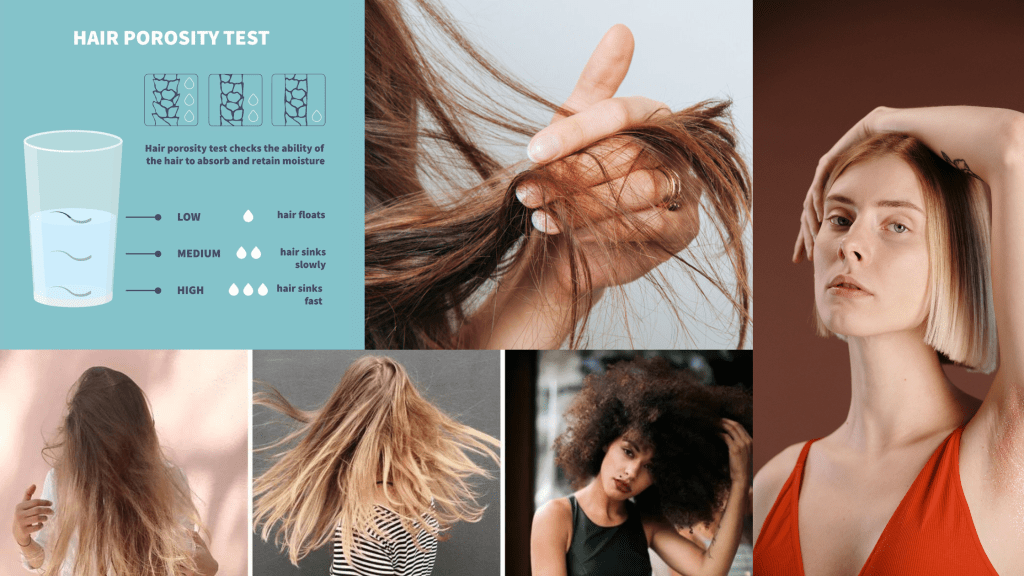
Step 1: Take a few strands of clean hair from different parts of your head.
Step 2: Fill a glass or bowl with room temperature water.
Step 3: Gently drop the hair strands into the water.
Step 4: Observe how the hair behaves in the water:
- If the hair floats on the water’s surface, it indicates low porosity hair.
- If the hair sinks slowly or stays suspended in the middle, it indicates normal porosity hair.
- If the hair sinks quickly to the bottom, it indicates high porosity hair.
Slip ‘n’ Slide Test:
Step 1: Take a single strand of clean, dry hair.
Step 2: Slide your fingers up the hair strand from the ends towards the scalp.
Step 3: Pay attention to how the hair feels:
- If the hair feels smooth and slips easily, it indicates low porosity hair.
- If you feel some resistance or a slight bump, it indicates normal porosity hair.
- If the hair feels rough or jagged, it indicates high porosity hair.
Understanding and embracing the key factors that influence the porosity of your hair can have a significant impact on its health and appearance. By being aware of these factors, you can make informed choices to enhance your hair’s porosity and ensure it looks and feels its best. Let’s explore some of these factors that play a crucial role in maintaining beautiful and vibrant hair:
- Chemical Treatments: Hair treatments like bleaching, perming, or using harsh chemicals can damage the cuticle layer, leading to increased porosity. Bleaching, in particular, significantly raises the hair’s porosity by removing pigment and disrupting the cuticle.
- Heat Styling: Frequent use of heat styling tools, such as flat irons and curling irons, can cause damage to the hair cuticle, leading to increased porosity. Excessive heat can strip away moisture and weaken the hair’s structure.
- Environmental Factors: Exposure to harsh environmental conditions, such as UV rays, wind, and pollution, can damage the cuticle and make the hair more porous over time.
- Mechanical Damage: Rough handling, vigorous brushing, or using tight hair ties can lead to physical damage to the hair cuticle, increasing porosity.
- Hair Color Treatments: The use of hair dyes, especially those with high ammonia content, can affect hair porosity, especially in the case of bleaching or repeated color treatments.
- Age and Hair Health: As hair ages, it naturally becomes more porous due to wear and tear. Additionally, hair health plays a role, and unhealthy hair may have higher porosity.
- Water and Humidity: Frequent exposure to water, especially hot water, can raise the hair’s porosity over time. Additionally, humidity can affect the cuticle’s ability to regulate moisture absorption.
- Chemical Buildup: Product buildup on the hair can cause the cuticle to become coated and less effective at regulating porosity.
- Genetics: Hair porosity can also be influenced by genetics, as some people naturally have hair with higher or lower porosity levels.
Taking care of your hair can be a delightful and rewarding experience! By being mindful of various factors and adopting positive habits, you can protect your precious locks and keep them in the best possible condition. Embrace the use of heat protectants, minimize chemical treatments, opt for sulfate-free shampoos, indulge in luxurious deep conditioning sessions, and shield your hair from environmental stressors. With these proactive steps, you’ll enjoy vibrant, healthy hair that radiates beauty and confidence. Let your hair shine!

Hair dyes have the amazing ability to transform your locks, allowing you to explore new and beautiful looks. During the enchanting dyeing process, the hair’s porosity may undergo some changes, particularly when certain chemical treatments are involved. These treatments delicately open up the hair cuticles, paving the way for stunning color absorption. Embrace the wonders of hair dye and discover the endless possibilities it offers in terms of moisture retention and vibrant, luscious locks.
Here’s how hair dyes can affect hair porosity:
- Bleaching: When lightening the hair color, a bleaching process is often used to remove the natural pigments. Bleaching opens up the hair cuticles to lift the color. This process can significantly increase the hair’s porosity by damaging the cuticle layer, making it more prone to moisture loss.
- Permanent Hair Dyes: Permanent hair dyes use ammonia or similar chemicals to open the cuticle and deposit color into the cortex of the hair shaft. This can alter the hair’s porosity, especially if the dyeing process involves repeated treatments or if the hair is already damaged.
- Semi-permanent and Demi-permanent Hair Dyes: These types of dyes are less damaging than permanent dyes as they don’t lift the cuticle as much. However, they can still affect the hair’s porosity to some extent.
- Henna and Natural Hair Dyes: These natural dyes generally have a minimal impact on hair porosity, as they don’t involve harsh chemicals that damage the cuticle.
After dyeing the hair, it’s essential to take extra care to restore and maintain its health. Deep conditioning treatments, protein treatments, and using hair care products specifically designed for color-treated hair can help minimize damage and maintain a more balanced porosity.
When it comes to the impact of hair dyes on hair porosity, there’s no need to worry! The degree of change depends on various factors, such as the type of dye used, the initial condition of your hair, and proper post-dye care. By being well-informed and taking the necessary precautions, you can confidently dye your hair while keeping it healthy, vibrant, and absolutely stunning!

Armed with this knowledge, you can confidently create a custom hair care routine tailored specifically to your hair’s needs. Don’t be afraid to experiment and find the perfect combination of products that work harmoniously with your hair’s porosity level. Through patience, love, and a personalized approach, your hair will transform into a radiant and gorgeous testament to your self-care. Embrace the journey of understanding your hair like never before and watch as it flourishes with vitality and beauty. Welcome this opportunity to unlock the true potential of your tresses and enjoy the transformation. Happy pampering and happy hair days ahead!
Further reading options:
- NaturallyCurly: The website NaturallyCurly offers a comprehensive guide on hair porosity, including how to determine your hair’s porosity, how to care for low, normal, and high porosity hair, and product recommendations. Visit: https://www.naturallycurly.com/curlreading/curl-products/hair-porosity-101
- Healthline: Healthline provides an informative article on hair porosity, explaining what it is, how to test it, and how to care for different porosity types. It also discusses factors that can affect hair porosity. Visit: https://www.healthline.com/health/beauty-skin-care/hair-porosity
- Naturally Curly: Another article from Naturally Curly dives deeper into the science behind hair porosity and the importance of understanding it for better hair care. It also provides tips for maintaining healthy hair. Visit: https://www.naturallycurly.com/curlreading/home/understanding-hair-porosity
- Black Naps: This article specifically focuses on caring for high porosity hair, providing valuable tips and product recommendations. Visit: https://blacknaps.org/high-porosity-hair-care/
- Curly Nikki: Curly Nikki’s article explores the topic of porosity and the importance of adjusting your hair care routine based on your hair’s porosity level. Visit: https://www.curlynikki.com/2015/11/why-hair-porosity-matters-for-natural.html
- Curl Centric: This resource provides a comprehensive guide on hair porosity, including methods for testing porosity and tips for caring for each porosity type. Visit: https://www.curlcentric.com/hair-porosity-101/
 MimiiMeis